Split Tee Clamp Supplier: The Smart Way to Expand Your Pipeline Network Without Downtime
All expanding pipeline systems reach the point where they need to connect new branch lines to existing operating pipelines without shutting them down. If you’re a water utility adding a subdivision to a water distribution main, or an oil and gas producer connecting a new well to a gathering line, the split tee clamp is your fastest and most economical answer. And picking the right split tee clamp manufacturer can mean the difference between a smooth project and a costly delay.
What Is a Split Tee Clamp?
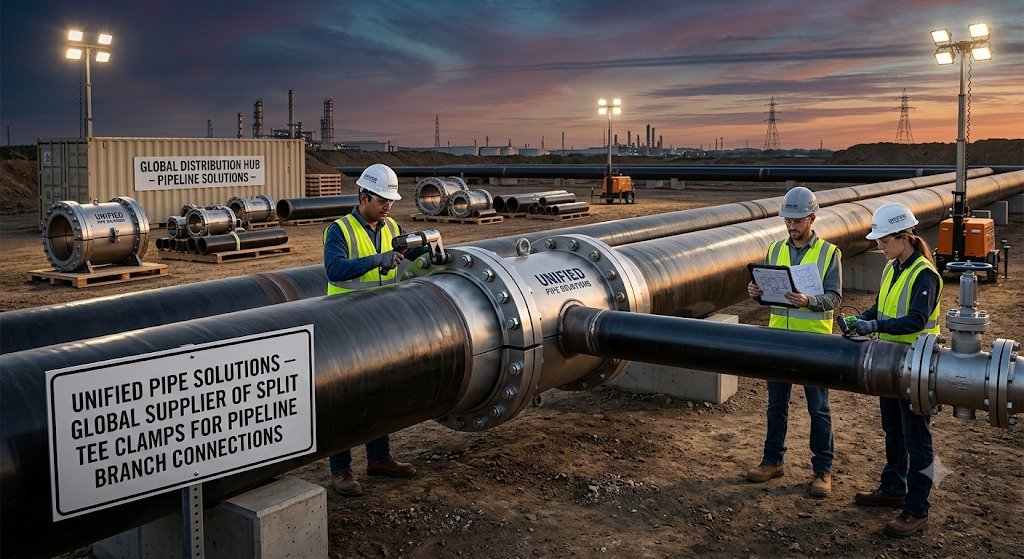
A split tee clamp is designed as a full-enclosure fitting that seats around an existing pipeline and creates a branch outlet. The split tee clamp features two half-shell bodies that bolt up around the host pipe, a branch outlet of the needed size and shape, along with a sealing system that provides pressure-tight seals between the clamp and pipe wall.
After installation and pressure testing, the split tee clamp creates a permanent, full-rated branch connection on an existing pipeline. A valve is connected to the branch outlet and the branch line is run through the valve. If the branch connection needs to be made while the host pipeline is in-service, then a hot tapping machine is used to cut through the pipe wall using the valve — without any system shutdown or loss of pressure.
Split tee clamps are manufactured to fit pipe from 2″ to 72″ in diameter, for working pressures from low-pressure water service all the way up to high-pressure gas transmission lines, and are available in carbon steel, stainless steel, and ductile iron.
How Is a Split Tee Clamp Installed?
Installation is simple. Clean and inspect the pipe surface at the point of connection. Position the two halves of the clamp around the pipe with the branch outlet facing the correct direction. Torque down bolts to compress sealing gaskets against pipe. Pressure test assembly through the branch outlet to ensure leak tight. Install valve and hot tap through closed valve if live tap is necessary, using hot tapping machine.
Installation usually requires two to four hours for a standard split tee clamp. Because no welding is required for mechanical designs, these clamps can be used in explosive areas, on pipes containing flammable fluids, or where hot work permits are hard to acquire.
Applications Across Industries
Split tee clamps are used in the water supply industry to make new service connections to water mains, install fire hydrant branch connections, and install bypass connections when replacing valves. These are common everyday tasks that municipal utilities and water suppliers rely on their split tee clamp provider to perform.
Oil and gas field operators rely on split tee clamps to tie in new production wells to gathering systems, install chemical injection connections on operating flow lines, make pig trap connections on transmission pipelines, and install instrumentation branch connections to operating lines.
Industrial facilities such as refineries, petrochemical plants and power plants use split tee clamps to add new process connections and install bypass lines around pumps, valves and meters without shutting down the plant.
Weld-On vs. Mechanical Split Tee Clamps
Both clamps types are useful, and a reputable split tee clamp supplier will stock both varieties. Weld- on clamps are welded directly to the host pipeline. They create a permanent, strong metallic bond and are suitable for permanent, high pressure applications. When welded connections are required per applicable pipeline code, weld-ons are used for permanent connections on oil and gas transmission lines. Mechanical clamps use a bolted sealing mechanism. No welding is required making them quicker to install. They can also be removed and relocated as needed. Mechanical clamps are commonly found on water distribution systems, medium-pressure gas distribution, and industrial applications.
What to Look for in a Split Tee Clamp Supplier
Design capability is critical. Your split tee clamp supplier should design the clamp to your host pipe size, branch outlet size, operating pressure and fluid. Catalogue items will seldom meet every specification needed for your project. Request design calculations and confirmation of code compliance.
Material certifications are non-negotiable. The clamp body should be made of ASTM-certified steel with a full mill test report while bolts and gaskets are specified and certified for your service conditions.
Customization is everything. Branch outlet sizes, orientations, flange ratings and host pipe dimensions change on every job. A supplier that will fabricate to your exact needs provides more value than one that makes you adjust your specifications to their standard product.
The ability to deliver quickly is often important. Pipeline expansion and maintenance projects are usually schedule-driven, so a split tee clamp supplier with sufficient inventory and manufacturing capability can avert expensive delays.
Pipeline Products Inc. — Reliable Split Tee Clamp Supplier Since 1975
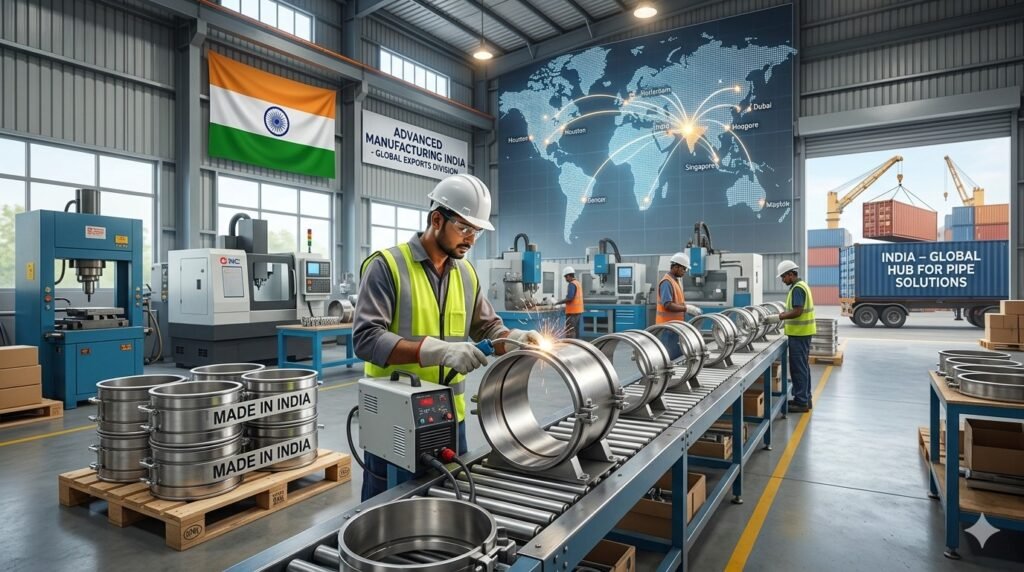
Pipeline Products Inc. is an oil and gas, water and industrial pipeline split tee clamp manufacturer and supplier based in Mumbai, India. We have been serving the industry as a reliable split tee clamp supplier for over fifty years. Available in mechanical and weld-on designs, our split tee clamps are designed for pipe sizes ranging from 2 inches to 72 inches, covering the entire range of pressure classes and branch outlet sizes. All of our split tee clamps comply with ASTM standards, and are tested and shipped with certifying documentation. Customized designs, stainless steel and rush orders are available upon request.
Conclusion
Split tee clamps are a pipeline operator’s go-to product when expanding pipeline systems or maintaining existing lines. Avoid pipeline shutdown expenses/risk, minimize project schedule and enjoy permanent, code approved branch connections for the life of your pipeline. Selecting a knowledgeable and technically competent split tee clamp supplier will ensure you receive the correct product for your application delivered on time and within budget. Pipeline Products Inc. wants to help fulfill your needs.
FAQ’s (Frequently Asked Questions)
Q1: Can a split tee clamp be installed on a live pressurised pipeline?
Yes. Mechanical split tee clamps can be installed on live, pressurised pipelines without any shutdown. The branch connection is made through a valve using a hot tapping machine, with the pipeline continuing to operate at full pressure throughout.
Q2: What branch outlet sizes are available?
Branch outlet sizes are available from 1 inch up to 24 inches or more depending on the host pipe diameter. Custom outlet sizes, flange ratings, and thread configurations are available from a quality split tee clamp supplier on request.
Q3: What is the difference between weld-on and mechanical split tee clamps?
Weld-on clamps are permanently welded to the host pipe and provide maximum strength for high-pressure applications. Mechanical clamps use a bolted sealing system, require no welding, are faster to install, and are preferred in hazardous areas or where hot work is not permitted.
Q4: What materials are split tee clamps available in?
Carbon steel is the most common material for general oil, gas, and water service. Stainless steel (SS304 or SS316) is available for corrosive service. Ductile iron is used in water distribution applications. Your split tee clamp supplier will recommend the correct material based on your service conditions.
Q5: How is a split tee clamp pressure-tested after installation?
After bolting the clamp to the pipe, the annular space between the clamp and pipe is pressurised through a test port on the clamp body. If the pressure holds without drop, the seal integrity is confirmed. This test is performed before the branch valve is opened or any live tap operation begins.