Pipeline Pig Supplier: Why Pipeline Pigging Is Essential and How to Choose the Right Equipment
No matter how carefully designed and constructed, pipelines develop deposits over time. Wax, scale, sand, water and corrosion products form layers on the inner walls of the pipeline. This limits flow capacity, speeds up corrosion and sets the stage for pipeline failures. The answer is pipeline pigging – inserting a device known as a pig into the pipeline to clean, inspect or monitor its condition. And central to every successful pigging programme is a dependable pipeline pig supplier.
What Is a Pipeline Pig?
Pipeline pigs are launched into a pipeline and pushed by the flow of product – oil, gas, water, whatever happens to be flowing. As it moves through the pipeline, the pig performs its intended task cleaning the pipe wall, separating two products, blowing out accumulated liquids, or pulling a variety of sensors that inspect the pipe wall for corrosion, cracks and other anomalies.
Pipeline pigs apparently got their name because the early cleaning devices sounded like pigs squealing as they moved through the pipeline. Modern pigs are actually precision engineered devices with literally dozens of design variations, but the name pig has become universal throughout the industry.
An experienced pipeline pig supplier provides the full range of pigs needed to meet all your pigging needs from simple cleaning to sophisticated inspection.
Types of Pipeline Pigs
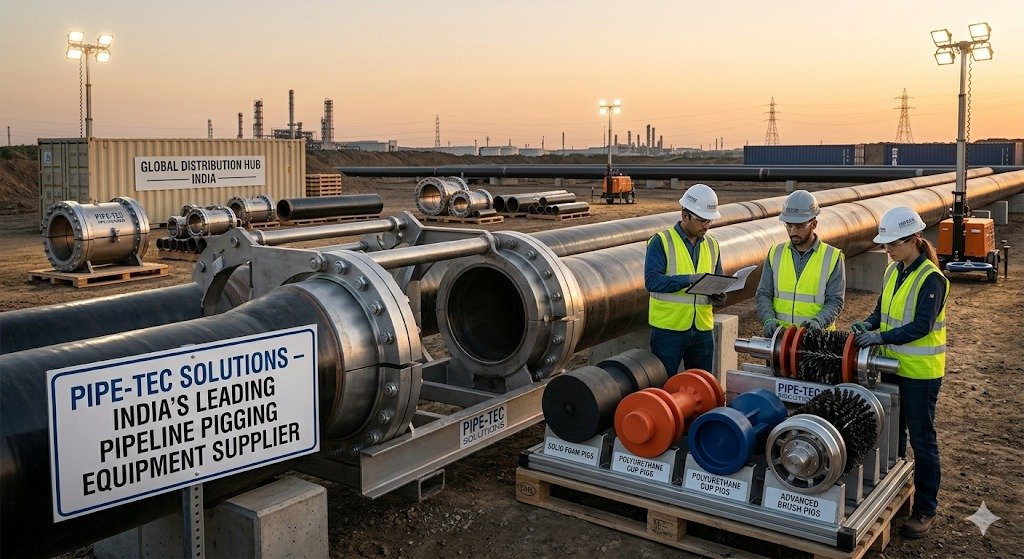
Foam pigs are the simplest and most common type. They are manufactured from polyurethane foam. Being soft and flexible, they conform to bends, reductions and other features within pipework that would stop a rigid pig. Foam pigs are used for light cleaning, removing liquids trapped within the pipeline and separating batches of product. Different densities of foam are available for light or aggressive cleaning.
Brush pigs have wire or nylon brushes mounted on their outer surface. As the pig passes through the line the brushes rotate and scrub the wall surface of the pipe. Brush pigs provide more aggressive cleaning than foam pigs and are typically used to remove scale, rust and other hard build-up. Brush pigs are often used as part of a multi-stage cleaning programme prior to running an inspection pig or commissioning a new pipeline.
Mandrel pigs are rigid steel bodies with replaceable sealing discs and drive cups. Mandrel pigs are used for cleaning, gauging and batch separation applications. The ability to change discs and cups means that they can be tailored to suit specific pipe conditions and pigging requirements.
Gauging pigs use an aluminium or lead alloy plate that deforms when it passes through a restriction in the pipeline, such as a dent or ovality. By analysing the deformation of the gauge plate after the run engineers can locate restrictions that must be repaired before more expensive inspection tools can be safely run.
Bi-directional pigs are specially designed to be pushed or pulled through the pipeline. They are used where there is limited access to pipework, such as dead-ends or looped pipeline runs that do not allow for a conventional launcher/receiver arrangement.
Why Is Pipeline Pigging Important?
Regular pigging helps avoid all these issues. Wax and scale buildup narrows the internal diameter of the pipe. This increases resistance to flow and lowers throughput volumes. Severe cases can lead to pipeline blockages that can take considerable time and money to remediate.
Water accumulation provides perfect conditions for internal corrosion and microbiologically influenced corrosion (MIC). Both can lead to severe wall loss and eventual pipeline leaks. Routine pigging pushes out built-up water and prevents corrosion from occurring.
Inspection pigs can carry sensors to measure and monitor corrosion, cracking and deformation. Intelligent pigs allow operators to identify areas of concern before they become problematic. With inspection pigging data, operators can schedule repairs as needed and avoid unscheduled downtime.
Operators worldwide are investing in pipeline cleaning and pigging services as regulation becomes stricter, infrastructure ages and reactive maintenance practices are replaced with pipeline integrity management programs. This is leading to high demand for pipeline pig manufacturers who can supply operators with an extensive selection of pigs and backed by excellent performance and technical support.
Choosing the Right Pipeline Pig Supplier
Ability to supply all your pigging needs
Buying your pigs from one supplier means less administration. Also, if you buy foam pigs, brush pigs, mandrel pigs, gauging pigs and bi-directional pigs from one pipeline pig supplier, you can be sure they will all work with the rest of your pigging programme.
Knowledge
Asking for the right pig isn’t always straightforward. You need to know the diameter and wall thickness of the pipe, internal geometry details, what product is flowing in the pipe, at what rate and what you are trying to achieve with the pig. A good pipeline pig supplier will ask you these questions and advise you on the most suitable pig to use. They won’t just take your order for the cheapest pig they stock.
Quality of materials
Nothing fails like cheap, poorly manufactured pigs. A pig that falls to bits before it reaches the other end of your pipe won’t clean or inspect very well. And if it doesn’t maintain good seal contact with the wall of your pipe it could cause you even more problems.
Delivery times
Pipeline pigging can be time critical. Whether you are carrying out a routine cleaning programme prior to an inspection pig run or scrambling to remove an unplanned flow restriction, you don’t have time to wait weeks for pigs to be delivered. Ensure your pipeline pig supplier has enough pigs in stock and can deliver quickly.
Pipeline Products Inc. — Your Trusted Pipeline Pig Supplier in India
Pipeline Products Inc. specializes in manufacturing and supplying pipeline pigs. Operating out of Mumbai, India we service oil and gas companies, water utilities, EPC contractors and pipeline maintenance companies throughout India and worldwide. We are a premier pipeline pig supplier with over 50 years combined industry experience. Our product lineup includes foam pigs, brush pigs, mandrel pigs, gauging pigs, bi-directional pigs and custom cut pigs for pipes ranging from 2″ to 72″.
Products are made to the highest quality specifications and technical support is offered to ensure you find the right pig for your application. Quick turnaround time and competitive pricing make Pipeline Products Inc. your leading choice when you need pipeline pigs for both regular stocking and emergency purposes.
Conclusion
Pipeline Products Inc. designs, manufactures and supplies all types of pipeline pigs. Our company is based out of Mumbai, India. We supply pipeline pigs to oil and gas companies, water utilities, EPC contractors and pipeline maintenance companies serving throughout India and around the world. At Pipeline Products Inc., we have been a pipeline pig supplier for over 5 decades. Our experience and knowledge allow us to provide foam pigs, brush pigs, mandrel pigs, gauging pigs, bi-directional pigs and custom designed pigs to fit any configuration of pipe ranging from 2″ to 72″.
All our pipeline pigs are manufactured to the highest quality standards. Our knowledgeable technicians are available to assist you in choosing the correct pig for your application. We pride ourselves on being able to get the order to you quickly at a competitive price. For these reasons, more companies choose Pipeline Products Inc. as their pipeline pig supplier time and time again, whether the need is expected or unexpected.
FAQ’s (Frequently Asked Questions)
Q1: How often should a pipeline be pigged?
Pigging frequency depends on the product being carried, the pipeline operating conditions, and the history of deposit buildup. Oil pipelines carrying waxy crude may need pigging every few weeks, while gas transmission lines may require pigging once or twice a year. Your pipeline pig supplier can help develop a recommended pigging schedule based on your specific conditions.
Q2: What pipe sizes are pipeline pigs available for?
Pipeline pigs are available for pipe diameters from 2 inches up to 72 inches and beyond for large-diameter transmission lines. Always specify the exact pipe inside diameter when ordering from a pipeline pig supplier, as pigs must be sized to maintain proper seal contact with the pipe wall.
Q3: Can pigs be used in pipelines with bends and restrictions?
Yes. Foam pigs are highly flexible and can navigate tight bends, wye connections, and reducers. Mandrel and brush pigs are available in configurations that can pass through standard bends. Your pipeline pig supplier will confirm navigability based on your pipeline geometry.
Q4: What is a gauging pig and when should it be used?
A gauging pig carries a metal plate that deforms on contact with restrictions in the pipeline such as dents, ovalities, or partially closed valves. It should be run before any inspection pig to ensure that the more expensive and sensitive inspection tool can pass safely through the line without being damaged or stuck.
Q5: Are pipeline pigs available for water pipelines as well as oil and gas?
Yes. Pipeline pigs are widely used in water transmission and distribution pipelines for cleaning, batch separation, and condition monitoring. The pig design and material specifications differ from oil and gas applications, so always inform your pipeline pig supplier whether the application is water, oil, or gas service.